The Story of the Whale (6+) - National Maritime Museum
From a wild animal hunted for profit to a threatened species — The Story of the Whale shows how humans’ view of whales has changed over the centuries.
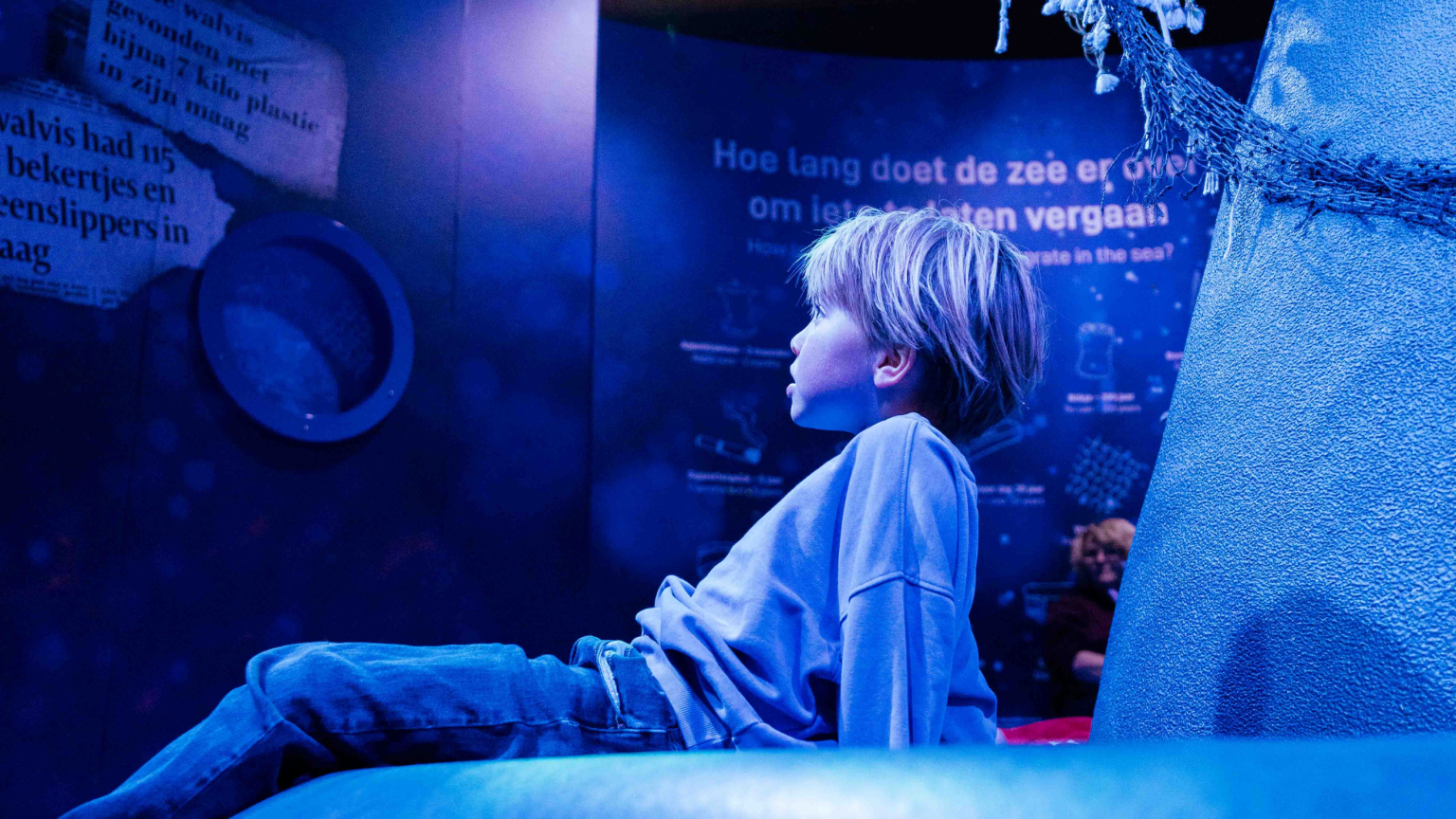
In this interactive exhibition, children (6+) walk through the history of the whale and whaling. In an engaging and educational way, they learn about different whale species, their habitats, and how humans have viewed whales throughout time. At the start of the exhibition, a bowhead whale opens its mouth for you — and at the end, you see its tail disappear beneath the surface.
An entrance ticket grants access to the entire museum, including Duiker Doris, Navigate between the stars, and a visit to the VOC ship.
This is an estimated duration.
Non-refundable
All exhibitions and facilities inside the museum are accessible by lift.
If you are visiting with a companion, this companion may enter the museum free of charge.
They must, however, reserve a (free) online ticket for the correct day.
Mobility scooters are not allowed due to collection safety.
You may borrow a wheelchair.
You can reserve one before your visit by calling 020 523 22 22 or emailing info@hetscheepvaartmuseum.nl.
Seating & museum stools
Benches are placed throughout the museum if you need to rest.
Museum stools are also available to borrow at the entrance of the Republic at Sea exhibition and on the east side of the ground floor.
You or your companion may take a stool and bring it to any exhibition.
Assistance dogs
Assistance dogs are welcome in the museum.
museum | Monday–Sunday | 10:00–17:00
museum shop | Monday–Sunday | 10:00–17:00
library | Monday–Friday | 10:00–17:00
In the interactive exhibition The Story of the Whale, children (6+) walk through the history of whales and whaling. They learn in an engaging, hands-on way about different whale species, their habitats, and how humans’ perception of whales has changed over time. At the start of the exhibition, a bowhead whale opens its mouth for you — and at the end, you see its tail dive away.
A frightening creature?
In the 16th century, people knew very little about whales. They considered them frightening sea monsters. When Dutch explorer Willem Barentsz travelled to the Arctic Ocean, perceptions began to change. The Arctic was teeming with whales, and Willem noticed how easily they could be caught. As whaling became profitable, more and more people joined the hunt. Whale meat, blubber (for oil), and baleen generated significant income on the markets.
Hunting the whale
In the 19th century, the Netherlands stopped whaling. But after World War II — when many resources were scarce — the hunt resumed.
In 1964, the last Dutch whaling ship set sail. Around this time, environmental movements worldwide united against whaling. Today, there is widespread opposition to hunting whales, and some species are even threatened with extinction.
Plastic soup: the whale’s modern-day threat
The final room of the exhibition, developed in collaboration with the World Wildlife Fund, explores plastic soup — one of the biggest threats to whales today. It offers a fascinating opportunity for all ages to learn about the current state of our oceans and the impact on these magnificent animals.
Did you know…
…the blue whale is the largest animal on Earth?
A blue whale can weigh up to 170,000 kilos (170 tonnes)!
With a body that size, it also has a huge appetite — eating around 3,500 kilos of plankton per day.
Alongside the blue whale, many other large whales roam the seas, including the sperm whale and the North Atlantic right whale.
Non-refundable